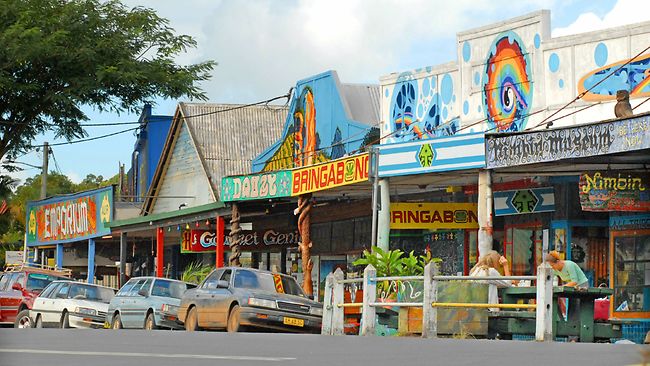

• About
  • Artists and Creatives
  • Cool Capitalists
  • Not-for-profits
  • Rody’s songs
    • DSS Blues
    • Mother Courage
    • Shadows in a Landscape
    • Sonnet 18
  • Social Pages

Universal Stranger

~ on Alienation, Being and Belonging

Universal Stranger

Author Archives: Rody

Nick Ward and The Power of Being Human

18 Monday Aug 2025

Posted by Rody in Music

≈ Comments Off on Nick Ward and The Power of Being Human

Tags

Album Review, Everybody Knows The Dice Are Loaded, Nick Ward, Welsh music

A confession: I’ve been going through a bit of a dark time recently, weighed down by all that’s going on in the world. I’m hardly alone in that, or in thinking that the remedy for our ills―and I hope there is one―lies in ordinary people like us rediscovering our shared humanity, uniting around it and fighting back against the inhumane forces that seem hell-bent on enslaving or destroying us.

You may say I’m a dreamer, but I’m not the only one…

Normally I wouldn’t bother you with my innermost thoughts, but they seem relevant for once because I’ve been listening to the latest album by Welsh singer-songwriter Nick Ward.

Nick Ward, Cowboyo

It’s a tonic―not because it’s a rousing call to arms; far from it. It’s an unassuming collection of beautifully crafted, deeply human songs delivered simply and authentically. In our present emergency, there’s a lot of power in being simply and authentically human and, for me at least, Ward’s album has been a welcome source of warmth and light amid the gloom.

The title, “Everybody Knows the Dice Are Loaded,” inevitably invokes Leonard Cohen, intentionally or otherwise, but Ward wears his influences lightly. He’s an established artist, having signed with Audiofile Records in 2009 and, since then, released 22 singles, 2 EPs and, with “Everybody Knows,” his seventh album. He looks country and often sounds country, but there’s more to him than that.

A Marketing Nightmare

“As a songwriter I listen to many genres of music,” he says via email from his home/home studio in the seaside town of Porthcawl, South Wales. “However, I have my favourite songwriters and they all go through various stages in their careers where they try their hands at genres not associated with them.  A couple of examples are Neil Young, who has dabbled in country, folk, metal, punk, and Elvis Costello, who has performed pop, rock’n’roll, country, easy listening. Even The Beatles dabbled. 

“I’ve listened to artists like this all my life so it’s bound to rub off on me. But about 10 years ago I found myself listening to country, especially old country, more than anything else. When I delve into a genre/artist I kind of assimilate myself into the whole thing. Hence the image. Stetson, denim, cowboy or biker boots, belts with appropriate buckles. Heck, my home studio has wood effect wallpaper, hat hooks, light up cactuses, a totem pole, Hank Williams poster and a huge bison head-shaped mirror. I may have overdone it!

“However, I don’t see myself as a country artist. I see myself as a maverick who dabbles in country, americana, folk. But I’m just a singer-songwriter who writes whatever takes my fancy. I enjoy the freedom of that. I guess I’m a marketing nightmare!”

From Bright and Breezy to Melancholy and Paranoia

The opening track, “Saddle Up, Settle Down,” is country to its bones, easing you in gently with harmonies reminiscent of The Eagles and a vision of “Here I am, lost on the highway/Ain’t no better way to be alive.” It opens a vista of wide roads and far horizons that sets up expectations nicely for all that is to follow. And there’s a lovely chord change from verse to chorus.

Except that what follows isn’t what you expect. “Stellar Stella,” a paean to a beautiful woman, changes the mood entirely from laidback horse ride through the desert to flight into space, complete with synth effects, ethereal guitars and dreamy lyrics (“Eyes are perfect like a diamond in the afterglow”) held together by a bass line which is both solid and playfully rhythmic.

The direction changes again with the third track, “It’s an Easy Life.” Featuring just Ward on vocals, piano and harmonica, it’s a lyrical evocation of a peaceful moment on a beach with children playing, starfish in rockpools, sand beneath feet. But the simplicity feels deceptive. Beneath Ward’s pleasant voice and attractive melody, there’s an almost tidal rip of melancholy. An easy life, but for how long?

Deceptive simplicity

From melancholy to introspection. “Outside Looking In” is a haunting reflection on age (“Tell me why I feel so old/I’m just trying to fit in”) and the creatively necessary but personally burdensome detachment of the artist (“Never had a dream come true, never had a dream at all/I was close to breaking through, but trying to walk before I could crawl”). But there’s no defeatism here. The moody and menacing rhythm section drives things along, only for sunlight to break through in the chorus with a shift from minor to major and the refrain, “I’m doing all right.” It’s a gem.

“With Just a Spark” and “Elysia” are both love songs but in very different styles, with “Spark” revisiting the country genre (complete with twangy lead guitar and pedal steel) while “Elysia” ventures into fresh territory―a sophisticated late-night feel based on beautiful vocal harmonies around (I think) raised sevenths (the backing vocals are one of the album’s many strengths).

“Here’s A Song I Wrote” links back to the preoccupations of “Outside Looking In”―ageing, the sense of time passing and the potential for art to slow the process. But, here, the introspection runs deeper: lines like “Well here’s a song I wrote, I find it good for my soul; I get to lose myself for a while,” and “When I pull my guitar on, start playing my own song, to stop time from moving on,” are among the rawest and most personally revealing on the album. It doesn’t hurt that the track has a faint Beatles flavour, reminiscent (to these ears) of “While My Guitar Gently Weeps.” Ward’s voice even sounds uncannily like George Harrison’s.

From bright and breezy country to melancholy and introspection, the songs’ moods and themes move from light to dark. The second-last track, “’Neath Open Skies”, takes the trajectory a stage further by skirting the edge of paranoia. The opening lines (“I live in a tree on open ground/Ain’t got no phone or TV/The powers that be want to cut me down/Big Brother’s got his eye on me”) set the tone, which is heightened dramatically by a combination of odd time signature (sounds like 6/8 to me), a stark, pizzicato bass line and tense strings. If I close my eyes, I can’t help seeing the shadow of Nosferatu creeping up the stairs. It really is that spooky.

After that, the final track, “Written In The Stars,” is not only a welcome relief, but a boost to the spirit. Ostensibly a song of loss (“Everybody knows the dice are loaded/It was written in the stars when time unfolded/Now there’s nothing left to do but to keep the memories of you/Safe from harm”) it has a warm, positive ambience, helped by a very catchy horn section and a relaxed but steady groove. It leaves you feeling that, whatever the ups and downs of life, you can eventually reach a point of acceptance. For that alone, it’s the perfect way to finish.

A Timely Reminder: Music Can Save You

This is a very well-produced album. Musically and stylistically, it’s open and accessible but has all the depth, light and shade that any intelligent listener could want. As I said at the outset, it’s a tonic. Before I listened to it, I hadn’t played guitar for nearly a year, such was the funk induced in me by the state of the world. Then I picked up an acoustic to try to work out one of Ward’s chord changes, and remembered again how much I enjoyed playing.

It’s true: music can save you. I owe Ward for reminding me, so the least I can do in return is urge you to give this excellent album a listen.

Triumph of the spirit: Jeff Cotton’s 52 years of healing

10 Wednesday Aug 2022

Posted by Rody in Music

≈ Comments Off on Triumph of the spirit: Jeff Cotton’s 52 years of healing

Jeff Cotton via Zoom on August 3, 2022 (Australian time)

Smiling, tanned, relaxed, sitting in a studio on his island home of Maui in the Hawaiian archipelago, Jeff Cotton is a very different man from the one who, 52 years ago and physically and mentally close to breaking point, finally quit what had been his dream job.

Jeff, then known as Antennae Jimmy Semens, had been one of the two guitarists with Captain Beefheart and His Magic Band, a legendary US ensemble that made an equally legendary album, Trout Mask Replica. Released in 1969, the album continues to be both controversial and influential.

Artists are supposed to suffer for their art, but not the way Jeff had done.

“Captain Beefheart and His Magic Band was my Vietnam,” he says.

The Trout Mask Replica era: Jeff Cotton/Antennae Jimmy Semens is second from right (Photo by Ed Caraeff/Getty Images)

Shortly after joining the band in 1967, Jeff received his call-up papers to serve in the Vietnam War.

“Obviously, I didn’t want to go to another country and take out my brothers and sisters, of any age, whether the children or elderly. The band wanted me and I wanted to be in the band, so, we did everything we could to get me out [of the draft], and we did get me out.”

Before long, however, Jeff found himself in the midst of another conflict. Beefheart, real name Don Van Vliet, was a creative visionary but, to put it mildly, a hard task master.

The band shared a house. While they typically rehearsed 18 hours a day for the Trout Mask Replica recording session, Beefheart usually slept. When he appeared, it was often to subject Jeff and the others to verbal and mental abuse, apparently to bend them more easily to his creative will.

Beefheart even encouraged violence. When Jeff was physically attacked by a stand-in drummer, he decided enough was enough.

“I thought I could escape war in Vietnam, but if that [war] is what’s laid out in front of you, you’re going to have it anyway. So, I had my Vietnam in the Magic Band. It was probably, for me, as intense and emotionally wrenching as going to war.”

His acceptance that war of one kind or another was to be his lot says much about Jeff’s philosophical take on life. It’s an attitude deeply embedded in his first solo album, The Fantasy of Reality, which he is about to release (August 12, 2022) to mark his return to the music scene after a 47-year absence.

The new album is a long way from Trout Mask Replica.

SMALL SIMILARITIES, BIG DIFFERENCE

Except, that is, in a couple of minor respects.

I suggest that his vocal on Elvirus is reminiscent of Beefheart. It’s a stretch, I know: Jeff’s light quavering tenor is nothing like the Captain’s booming baritone, but the falsetto flick-ups that punctuate much of his intonation echo a hallmark of Beefheart’s style.

Jeff disavows any mimicry.

“Every song I write tells me what it needs in voice or whatever.  I’m 74, and I think I sound more like 97.  But I like humour.  On Heavy, another song on the album, I use a very old man’s voice.  I won’t tell you who he was but I used his voice.”

But Jeff does see a link between Trout Mask Replica and one of his instrumental tracks, On the Thread.

“That’s one of my favourites because I do like avant-garde-type music.  And Beefheart fans may not see it exactly as I do.  They may say, ‘Well, that doesn’t seem too Beefheart to me,’ but that’s my concept.  Had I been more influential back then in the Trout Mask days, the songs would have probably been a little more conservative, like On the Thread.”

Of the three instrumentals on Trout Mask Replica, the one likeliest to offer a line of descent to On the Thread (to my ears, at least) is Hair Pie: Bake 2. Both tracks have a full band arrangement (Jeff played all the instruments on The Fantasy of Reality, and programmed the drums) and foreground intricate interplay between guitar parts.

But there the similarity ends. While Hair Pie: Bake 2, like the rest of Trout Mask Replica, is harsh and discordant, On the Thread is light and airy—indeed, almost airborne.

The difference provides clues not only to where Jeff stands, musically and personally, in relation to Trout Mask Replica, but also to his innermost character, and to the distance he has travelled, emotionally and philosophically, since, as a 21-year-old, he helped make that iconic album.

FROM FRAGMENTATION TO WHOLENESS

This article is not meant to be about Trout Mask Replica. The album casts a long shadow, however, and it seems necessary to enter the darkness to draw Jeff and his own album into the light.
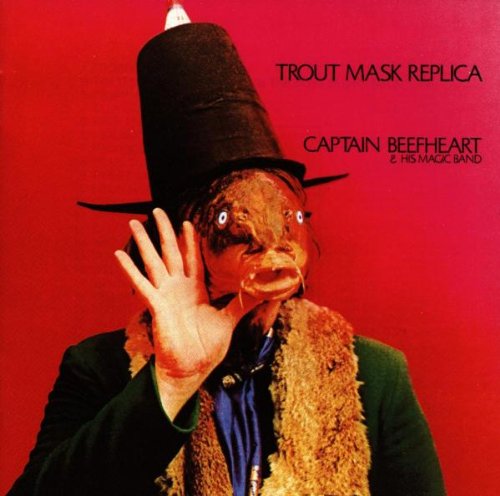
Sleeve of the Trout Mask Replica double album, released June 16, 1969

While Trout Mask Replica has grown in critical esteem over the years, it continues to divide ordinary music fans into lovers and haters. Prior to its release, Beefheart and the various incarnations of the Magic Band had been a respected blues-rock outfit with increasingly psychedelic leanings.

With Trout Mask Replica, they shredded that legacy. Steady beats were abandoned in favour of arhythmicality and clashing time signatures, while melody and harmony gave way to atonality and a sonic grind based on random horn-blowing, strangulated guitars and Beefheart’s wild vocals.

Even fans would concede that it sounds like a bear roaring drunkenly to the accompaniment of metal scraping against metal. But they hear something else, too: an underlying order and beauty.

Beneath the chaos, many elements and influences are at work, from the band’s roots in the delta blues to the free jazz of John Coltrane and Ornette Coleman, and even (according to those who know about these things) the serialism of Stockhausen and fragmentariness of Stravinsky.

At the risk of sounding pretentious (oh, go on, then), it reminds me of T. S. Eliot’s classic modernist poem, The Waste Land. Both break down accepted artistic forms. In the poem, Eliot uses the phrase, “a heap of broken images”. It could easily describe both the poem and the album.

The Fantasy of Reality couldn’t be more different. Instead of fragments it offers an aesthetic wholeness based on Jeff’s rich blues sensibility and deep spirituality—both of which are evident on the album’s opening track, Does It Work for You?
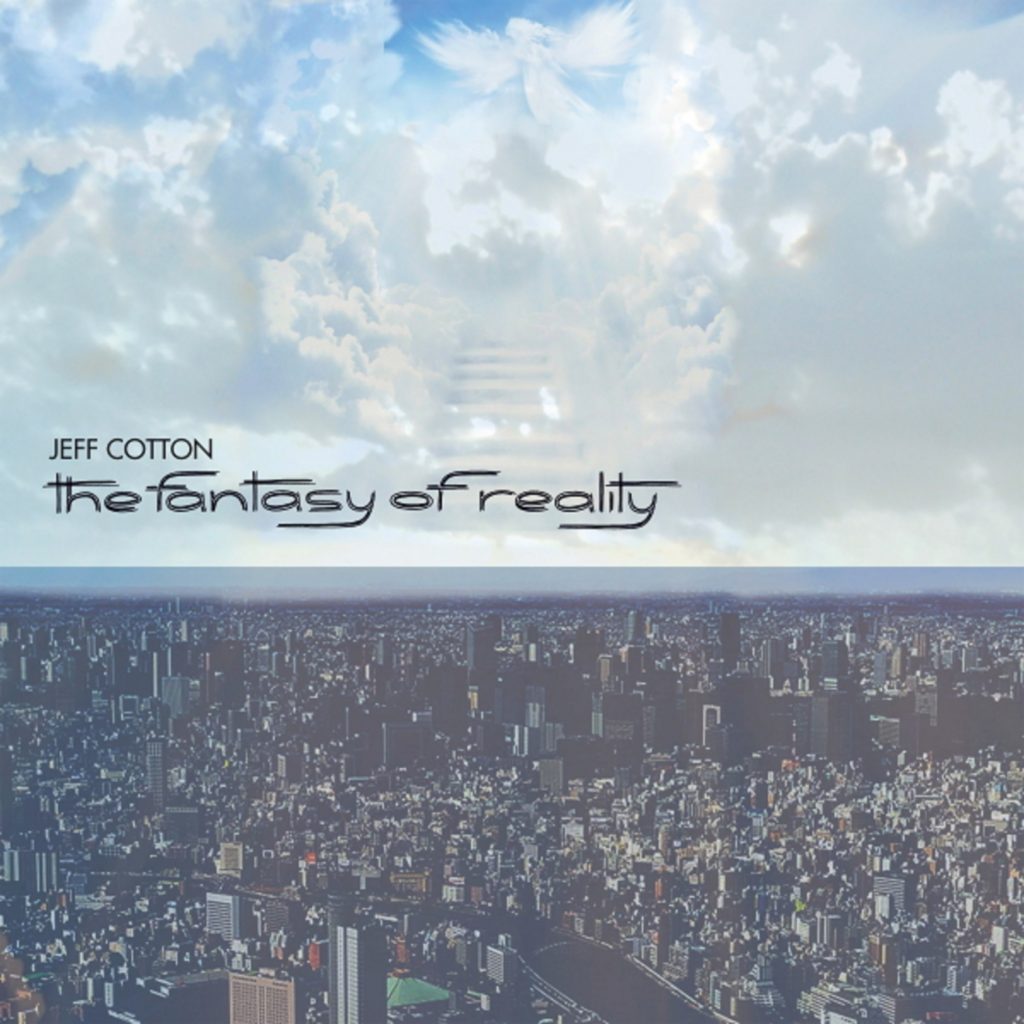
Jeff Cotton’s debut solo album, The Fantasy of Reality, released August 12, 2022

What, in Jeff’s view, does the album say about how he has developed, musically and personally, in the last 50 or so years?

“40, 50 years ago, I believed in art for art’s sake and, today, I’m not interested in that at all.  I’m interested in communication and connection with another being, another human being.  So, all the music has evolved.  The lyrics have evolved, and the music has evolved, in that direction.”

He cites as example another instrumental from the new album, a classically-flavoured solo-guitar piece called Ivy. Like On the Thread, it’s warm and lyrical, but takes its strength from a deliberate sparseness.

“I’m looking for the least notes, the simplest construct possible. You’ve heard it many times: It’s not what you play; it’s what you don’t play. It’s the silence between. That’s why I love music even more than film, in some ways, because music allows the listener to cocreate. 

“And if there’s more space in the song, there’s more time and space for people to cocreate.”

For Jeff, the ideas of communication and cocreation have a philosophical as well as a musical dimension, because they are ways of drawing people closer to each other.

“We’re at a unique time in history. There’s never been anything like it before, and we’re all in it together.”

THE DROUGHT BREAKS

It was when he co-founded MU in 1971 with two old friends and musical collaborators, guitarist Merell Frankhauser and drummer Randy Wimer, that Jeff fully began to step out of Beefheart’s shadow.

MU—short for Lemuria, the mythical lost Pacific Ocean continent that preceded Atlantis—recaptured some of the idealism and optimism of the pre-Manson 1960s. The band’s fascination with the legend behind its name led to its relocation from California to Hawaii, now Jeff’s main home base.
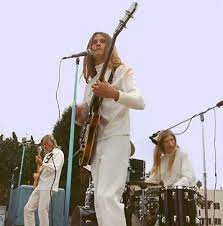
Jeff Cotton with MU, early 1970s

It was around this time that Jeff began the healing process he alluded to in his YouTube interview a few years ago with Canadian musicologist Samuel Andreyev. It wasn’t just his time with Beefheart that he was healing from, however.

“By the time we’re teenagers, we have had a lot of reprogramming done on us. Unconscious reprogramming is a nice way to put it—or the dark side—where we don’t even question things until a certain time in our life.  Maybe something will happen that’s really heavy and we begin to question our lives.  Or some people say they hit a bottom before they started coming up.

“So, I had everything everybody else did to deal with as a kid, the emotional stuff.”

His time with Beefheart provided an extra difficulty, but he bears no grudges.

“I can look back at it and really enjoy it because, yes, I did a lot of healing work. I mean, right from the get-go—every kind of cutting-edge modality I could find.  Rapid eye technology is outrageous.  There are so many other different things that [I] did.  And so, I cleared it, as much as I could.  

“To me, it was important to clear the emotional garbage, because I don’t care how spiritual one may be, if one’s emotional body is polluted, all you’re going to do is shine that beautiful light through a maze of yucky colours. So that, to me, was a responsibility.”

In 1974 he converted to Christianity (but did not, contrary to some online bios, study for the Christian ministry). MU disbanded in 1975 after which Jeff devoted himself to family (he has three adult children) and medical missionary work. His wife Len-Erna—“a great musician and a wonderful writer”, with whom he co-wrote and performed at small, private gigs—died in 2017.

Since then, Jeff has been musically silent. But that’s all about to change. Not only is he releasing his first solo album, work on a second and third album is “70 to 80 per cent complete”.

It’s been a long drought. Why is it breaking now?

LET’S GET THIS FIRE LIT

There are two explanations for the timing. Technology is one.

“I didn’t get into recording music until about 2005, because I was always a little queasy about digital recording back in those days. To me, it was like a hospital—very clean and no character. When a console that was warm came on the market, I started recording.”

Raising three kids is another.

“A lot of the basic tracks on this first album were done in very little increments. If I had 15 minutes, I’d go down in the studio and lay down a part.  Maybe a couple of hours later, I could come down for a half hour.  After everybody went to sleep at night, I might be able to do two hours.  So it was literally put together in that fashion.

And what about the motivation for making the album? Was Jeff driven by a desire to meet specific creative goals, or was the impetus deeper and more personal?
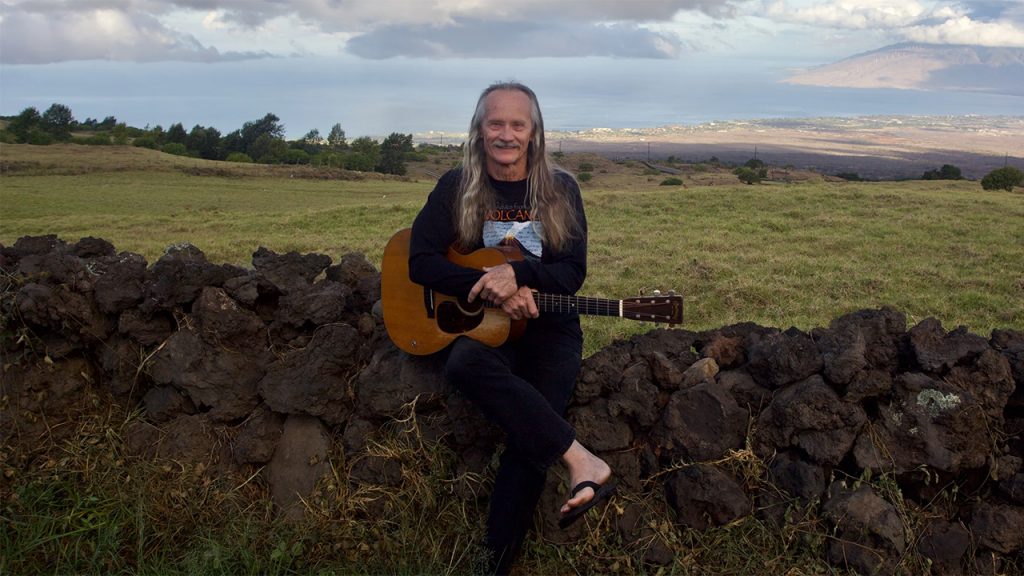
Jeff Cotton recorded The Fantasy of Reality for “deep and personal” reasons (Image credit: Press)

“It was deeper and more personal.  I have wanted, all my life, to do something that counted for others.  Not so I would just have a notch on my gun, but to do something for others that was positive.  And that’s been my whole motivation.  Now obviously, that’s a thought of a young kid, but as you get older, it takes on a deeper meaning.

“And we need love in this world.  We need to love one another, is what we need now.  We know that.  And we need to do it because every human being on this planet is a genius.  Many just don’t know it yet and they don’t know what their genius is.

“And so, my heart is to, hopefully—because I’m trying to live that life—inspire others to be motivated and then to begin their path and journey, if they haven’t already, to know who they really are, because everybody has a great magic within them. 

“And if people get their fire lit, we can clear this world up.”

You Can’t Keep a Good Gal Down: Barbara Dane, Progress and Tradition

31 Thursday Oct 2019

Posted by Rody in Music

≈ Comments Off on You Can’t Keep a Good Gal Down: Barbara Dane, Progress and Tradition

Two blues tracks—one New Orleans jazz-style, the other a hard-edged post-Chicago blues-rock sound—recorded 57 years apart. They’re the same song. One other thing they have in common: the singer.

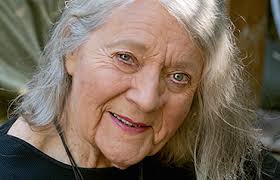
Barbara Dane, ladies and gentlemen.

If you haven’t heard of her it’s probably because you grew up in the 1960s or later and you’ve been too busy listening to all the people—Bob Dylan and Bonnie Raitt are just two off the top of my head—who have been influenced by her extraordinary career of singing and activism.

At 92, she’s still with us, thank God, and still performing on special occasions. Let that sink in: born in 1927 and still singing the blues.

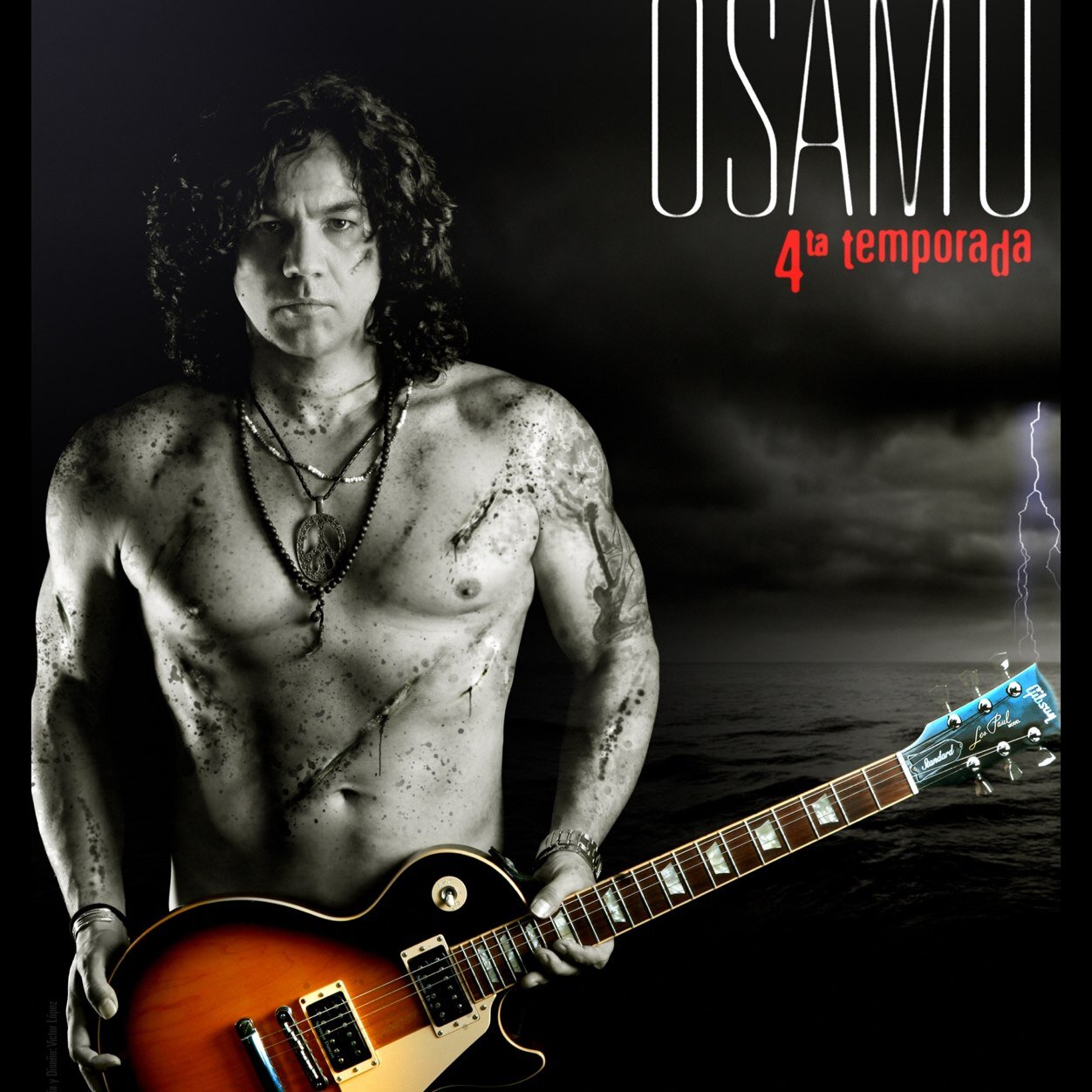
And how. Here’s her most recent recording of “Good Morning Blues”, with Cuban rocker Osamu Menendez and his band.

That was cut in 2014, when Barbara was 87. This is her first-ever recording of the song, with the sublime clarinettist George Lewis, in 1957:

“I sound so green I can hardly recognize myself,” Barbara says now of that earlier recording. You can see her point, but it’s not just the 57-year difference in her voice, it’s the contrast in the styles of music too.

In the George Lewis version, the music has the classic demeanour of an old bluesman, dogged and sweetly melancholic, while Barbara’s voice is strong and soulful in a wholesome way which, while sympathetic to the music, provides a contrasting sense of freshness.

Barbara Dane 1957

Barbara then…

But it’s not “green” in the sense that most people would use the word. It’s the voice of the “good gal feeling bad”, trying to hold everything (including her relationship with a cheating man) together through sheer strength of will and personality, with little hope and even less romantic illusion.

Wind the clock forward and we’re almost in post-apocalyptic territory, musically and visually. The overtly political video was posted—and presumably created—in 2017, three years after the audio was recorded. Timewise, they chart an arc that starts a year or so after the launch of the Black Lives Matter movement and ends the year that Trump came to power.

Put the video to one side for a moment, and just listen to the music. Osamu’s arrangement draws heavily on the old Lil’ Son Jackson/Muddy Waters “Rock Me” riff (that’s the sexually menacing one, not to be confused with B.B. King’s much silkier “Rock Me Baby”) and the band—led by Osamu’s seething guitar and a harmonica that howls like a junkyard dog—locks it down tight.

What’s surprising is how well Barbara’s voice—weathered and leathery at the edges, but still rich and gorgeous at the centre—suits the treatment. It’s far more at home in this dystopian soundscape than the voice of her 30-year-old self could ever be.

Barbara DAne 2014

…and now

How can a 92-year-old singer, with a career behind her that’s longer than most people’s lives, be so bang-on relevant today? Has Barbara evolved with the times, or have the times finally caught up with her? I suspect that the answer, if there is one, lies somewhere in her backstory.

AN INTERESTING TENSION

Barbara, first and foremost, has always been her own woman—one blessed with an outstanding voice and a passion for social justice. According to that fount of all knowledge, Wikipedia, “Out of high school, Dane began to sing regularly at demonstrations for racial equality and economic justice. While still in her teens, she sat in with bands around town and won the interest of local music promoters. She got an offer to tour with Alvino Rey’s band, but she turned it down in favour of singing at factory gates and in union halls.”

As that last sentence suggests, music and social justice have always been two sides of the same coin for Barbara. Her career as an activist has included travelling to Cuba in 1966 as the first US musician to tour there after Castro’s revolution, leading (while playing guitar and singing) civil rights marches and protests against the Vietnam war, touring and performing for anti-war GIs, campaigning for the environment and joining Pete Seeger in New York in 1978 in support of a miners’ strike.

In 1964, Bob Dylan wrote, in a letter to Broadside magazine, “The world needs more people like Barbara, someone who is willing to follow her conscience. She is, if the term must be used, a hero.”

Barbara Dane and Dylan

Dylan sits in with Barbara at a gig in 1963

In terms of her social activism, then, Barbara has been a leader and an agent of change, someone ahead of her times. There was, and continues to be, a natural affinity between her political views and the music she loves and plays, which is essentially the music of the underdog. But there’s an interesting tension in the fact that while Barbara is a political progressive she is, musically, steeped in tradition.

How does that tension resolve or contain itself? It comes back, I think, to the fact that Barbara is her own woman, artistically as well as politically. She is equally at home in, as well as adept in, folk, jazz and blues. Her musical achievements are the stuff of legend but all I can do here is list, in no particular order, some (and only some) of the people she’s played with: Memphis Slim, Willie Dixon, Muddy Waters, Clara Ward, Mama Yancey, Little Brother Montgomery, Louis Armstrong, Jack Teagarden, Art Hodes, Roosevelt Sykes, Otis Spann, Willie Dixon and Wilbur De Paris (Wikipedia). Not listed by Wikipedia, but two of my favourites, are Lightnin’ Hopkins and the Chambers Brothers.

Barbara Dane and Lightin Hopkins

Lightnin’ and Barbara

In 1961, she gave a uniquely personal expression to her commitment to music and social justice when she opened her own club in San Francisco to introduce the blues to a wider, white audience. In 1970 she founded her own record label to promote international protest music.

Her musical originality works in the same direction as her political singlemindedness: the fact that she sings beautifully and authentically across genres makes her, within her field, diverse and unclassifiable; her ability to reveal the universal spirituality that lies so deep in jazz and blues transcends the music’s racial origins (she was one of the first white female artists to be profiled by Ebony magazine[1]), and her selfless promotion of other artists created new audiences and new possibilities. In her music—particularly in the way she has interpreted and promoted it—she has always been ahead of her times.

In what sense, if any, has she evolved with them?

YES AND YES

Earlier, I contrasted the progressiveness of Barbara’s politics with the traditionalism of her music. I confess to being a little disingenuous there, as I implicitly associated the politics with some sort of dynamic quality and the music with a more static one. But, as we all know, traditions must live, breathe and change if they are to survive. It’s in that sense that I understand Barbara to have evolved, and I can’t think of a better way of illustrating what I mean than by going back to “Good Morning Blues”—both the history of the song, or part of the history, and her two versions.

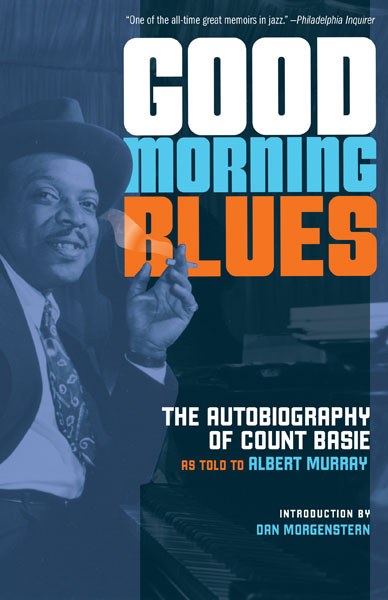
Count Basie GMB

His Excellency

Count Basie is credited as the composer and his recording of it was issued in 1937, when Barbara was 10 (yes, I know it’s rude to harp on about a lady’s age but, hell, this is history). The lyrics, sung by Jimmy Rushing, were, one might say, a little on the light and frothy side:

Good morning blues, blues how do you do
Babe, I feel alright but I come to worry you
Baby, it’s Christmas time and I want to see Santa Claus
Don’t show me my pretty baby, I’ll break all of the laws
Santa Claus, Santa Claus, listen to my plea

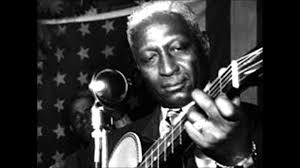
The next version I’ve come across was by Lead Belly, recorded in 1940 when Barbara was… nah, you work it out.

lead belly GMB

Lead Belly: bluesman and convicted killer

Now the song gets serious (the lines in italics are spoken):

Now this is the blues
There was a white man had the blues
Thought it was nothing to worry about
Now you lay down at night
You roll from one side of the bed to the other all
Night long
Ya can’t sleep, whats the matter; the blues has gotcha
Ya get up you sit on the side of the bed in the mornin’
May have a sister a mother a brother n a father around
But you don’t want no talk out of em
Whats the matter; the blues has gotcha
When you go in put your feet under the table look down
At ya plate got everything you wanna eat
But ya shake ya head you get up you say “Lord I can’t
Eat I can’t sleep whats the matter”
The blues gotcha
Why not talk to ya

Tell what you gotta tell it
Well, good morning blues, blues how do you do
I couldn’t sleep last night, I was turning from side to side
Oh Lord, I was turning from side to side
I wasn’t sad, I was just dissatisfied.
I couldn’t sleep last night, you know the blues walking
‘Round my bed,
Oh Lord, the blues walking ’round my bed
I went to eat my breakfast, the blues was in my bread.
Well good morning blues, blues how do you do.
Well, good morning blues, blues how do you do.
I’m doing all right, well, good morning how are you.

The blues evoked by Lead Belly are dark and sinister, in the tradition of Robert Johnson’s “Hellhound on My Trail”. Barbara, in her version with George Lewis, drinks from the same well, but with a difference:

Oh, good morning blues, blues how do you do
Oh, I’m feeling mighty well baby how are you
I got up this morning the blues walking round my bed
I couldn’t sleep I got up this morning the blues walking round my bed
I went to eat my breakfast the blues was all in my bread
The blues ain’t nothing but a good girl feeling bad
I lost my good man and every dime I ever had
I’m going down to the river and sit down on a log
Oh I’m going down to the river and sit down on a log
If I can’t be your woman I’m not gonna be your dog
I sent for you yesterday but you come walking today (24 hours late)
I sent for you yesterday but here you come walking today
Well, If you can’t do no better why don’t you just stay away, stay away.

By introducing the line, “The blues ain’t nothing but a good girl feeling bad,” Barbara manages to be traditional and innovative at the same time. It’s based on what is probably one of the most famous lines in blues music—“The blues ain’t nothing but a good man feeling bad”—from one of the first blues songs ever published, in 1912 (in a way which, by today’s standards, would be spectacularly politically incorrect). But, just as Barbara takes “Good Morning Blues” back to the origins of its genre, she updates the song by re-gendering it. She breaks with Basie and Lead Belly and makes it something new—a woman’s song. Her artistic initiative in this respect is distinctive and personal, but what she creates is historically significant for all women.

True, Barbara wouldn’t have been the first female blues singer to feminise a song, but “being first” isn’t the point. The re-gendering of songs is a tradition within the broader blues tradition, and Barbara makes an original—in the sense of distinctive and personally authentic—contribution to both. I’m familiar with only two other versions of “Good Morning Blues” by female singers, both of which post-date Barbara’s: Ella Fitzgerald’s (1960) and Della Reece’s (1999). Both are a world (in Fitzgerald’s case, a universe) away from Barbara’s sassy feminism.

The point seems to be that, even when she breaks new ground, Barbara affirms the tradition within which she works.

Osamu

In Japan, the name means “discipline, study”

Here are the lyrics of her version with Osamu:

Well, good morning blues, blues, blues how do you do
Good morning blues, blues, blues how do you do (looking pretty good)
Oh, I’m feeling mighty well but I want to know how good, partner, are you?
Let me say what happened to me last night
I lay down last night I was rolling from side to side
Do you know what, I was not sick honey I was just dissatisfied (you know what I’m talking about)
Well I rolled and I tumbled and cried the whole night long
Well I rolled and I cried, cried the whole night long
Now I had the blues so bad, I couldn’t tell right from wrong
Well I sent for you yesterday and you come walking today
You dragging them dogs and you come walking today
If you can’t do no better I’m going to throw your old number away
I’m going down to the river and sit down on a log
Oh I’m going down to the river and sit down on a log
If I can’t be your woman I’m not gonna be your dog

The delivery of these lines is certainly more knowing, and humorously so, than on the “green” 1957 version (incidentally, humour is very much part of Barbara’s style; check out “The Kugelsburg Bank” on her Throw It Away album—it’s hilarious). But, while Osamu’s urban rock places this interpretation by Barbara firmly in the early 21st century, Barbara draws once again from the early history of the blues by including lines (my italics) from “Rollin’ and Tumblin’”, first recorded in 1929, by Hambone Willie Newbern. It’s probably one of the most-recorded blues songs of all time (I first heard it on Big Joe Williams’ Classic Delta Blues album, released in 1964).

So, in answer to the question, “Has Barbara evolved with the times, or have the times finally caught up with her?”, the answer appears to be “Yes, and yes”. She’s as relevant today as she has always been because—by virtue of her fierce independence, originality and musical gifts—she has placed herself both at the leading edge of social change and at the living core of a self-replenishing tradition, the two—change and tradition—working together seamlessly.

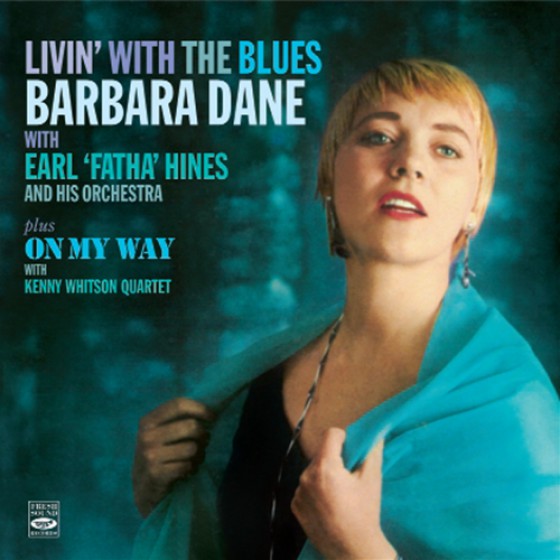
Barbar Dane Livin with the Blues

Everything about this pic says “iconic”

From this perspective, I would argue that Barbara’s long life and career are best seen, not in terms of simple linear progression, but more as a continuous backtracking and moving forward, the effect of which has been to broaden and deepen her art and political commitment constantly, to the spiritual  enrichment and benefit of her audience and, from all accounts, those who have known and worked with her.

It’s quite a legacy, but that’s not all. A documentary about Barbara’s life is under way: true to Barbara’s principles, this is not a slick Hollywood production but relies mainly on donations, which you can make here. Better still, Barbara’s legacy won’t be confined to video, or audio, or the written word. It’s already alive and kicking in the next generation of impassioned musicians: Osamu is her grandson….

Barbara Dane Pablo Osamu

Music dynasty: Barbara, son Pablo and Osamu

[1] Downbeat.com

The Sidemen: Turning Music History into a Timeless Moment

07 Wednesday Aug 2019

Posted by Rody in Music

≈ Comments Off on The Sidemen: Turning Music History into a Timeless Moment

One way to think about Byron Bay is as a sort of bohemian Cote d’Azur: many of the rich who retire or build holiday homes here made their money in the more louche areas of capitalism, such as media or entertainment, and its style and atmosphere come from the young and partly transient population of surfers, neo-hippies, buskers, artisan pop-up stallholders and tattooed baristas.

The vibe is laidback, rhythmic, sensuous (all those colours, sounds, smells and flavours) and sensual (tanned young bodies and…but enough of that).

Like its Mediterranean counterpart, it has natural beauty to spare: the town prostrates itself behind an elegant sweep of sand that curls at one end into the easternmost point of Australia, Cape Byron, before losing all sense of itself in the almost fluorescently blue ocean.

Byron at dawn

Good morning, Australia (Source: west1.com.au)

You don’t have to be rich to live comfortably here, and it doesn’t matter how old you are, because it’s a place for the young at heart. And if you’re not, you soon will be. After all, the sun makes its first mainland-Australia landfall here every day. Who can contemplate that fact without feeling, somewhere in their bones, a stirring of youthful optimism?

It’s home to a lot of artists and musicians, including most of The Sidemen, which helps to explain why they launched here. But don’t let their residency beguile you into thinking they personify the town’s insouciant hipness. When I say they “launched”, I mean “went off like a rocket”.

Picture the scene: Byron Theatre, a charming weatherboard structure in the middle of town, on a balmy Saturday evening in May. The 246-seat auditorium is sold out and the audience—mainly boomers like myself with a smattering of Generations X and Y and the occasional iconic Byron yummy mummy in designer hippy gear—is good humoured and, between sips of wine or beer, talkative as it waits for the show to begin.

We’re here to see five musicians who have spent their careers backing some of the biggest names in rock or pop since the 1960s but who, until tonight, have never appeared as an act in their own right.

Jeff Burstin and Rick Fenn (guitars), Bruce Haymes (keyboards), Greg Lyon (bass) and Grant Gerathy (drums) have worked variously with the Black Sorrows, Jo Jo Zep and the Falcons, 10cc, Nick Mason and Dave Gilmour (both of Pink Floyd), Renee Geyer, Paul Kelly, Peter Green (Fleetwood Mac), Crossfire, Georgie Fame, the John Butler Trio and…that will do for now.

Sidemen-poster-738x1024

Roll up! (As in, come and see the show…)

The project is the brainchild of Steve Banks (Banksie), a gifted singer, songwriter and guitarist (and, full disclosure, old mate) who, only a few years ago, escaped from the world of business in Sydney and relocated to Byron to pursue his long-held and much-deferred musical dreams.

His aim (which, it turns out, is part of a wider agenda) is to give these massively credentialled and seasoned musicians the opportunity to play live together and entertain the audience with stories about their times on the road. It’s an irresistible formula.

It also raises some interesting questions. The show is formally billed as “Steve Banks and The Sidemen”. How will Banksie balance his role as vocalist and front man with his avowed intention of putting The Sidemen “front and centre”, given that they are functioning, to all intents and purposes, as his sidemen?

And what is the audience hoping to gain? A trip down memory lane? A chance to revisit the soundtrack of their lives? Relive the glory of their youth? Experience once again the glamour of the stars they once worshipped? Enjoy a bit of celebrity gossip?

Paradoxes and ambiguities, I think. But not for long: the evening will end by resolving itself in, for me, a moment of unexpected clarity.

THE SOUNDTRACK OF OUR LIVES

As far as this audience member is concerned, the answers to all the above questions are in the affirmative. I’m a tailender of the boomer generation: the music and the acts that The Sidemen brought to life and nurtured for all those years—still nurture—helped shape my sense of myself and my view of the world. I’m pretty sure all my peers in the auditorium feel the same way.

Let’s take a few random examples. Georgie Fame and the Blue Flames. I grew up in the UK but never saw them live. They were, however, a frequent, vibrant presence on our grainy black and white TV, with Fame on Hammond organ backed by a very tight r’n’b/jazz/ska combo (bands like that were always “combos”, they were never “bands”).

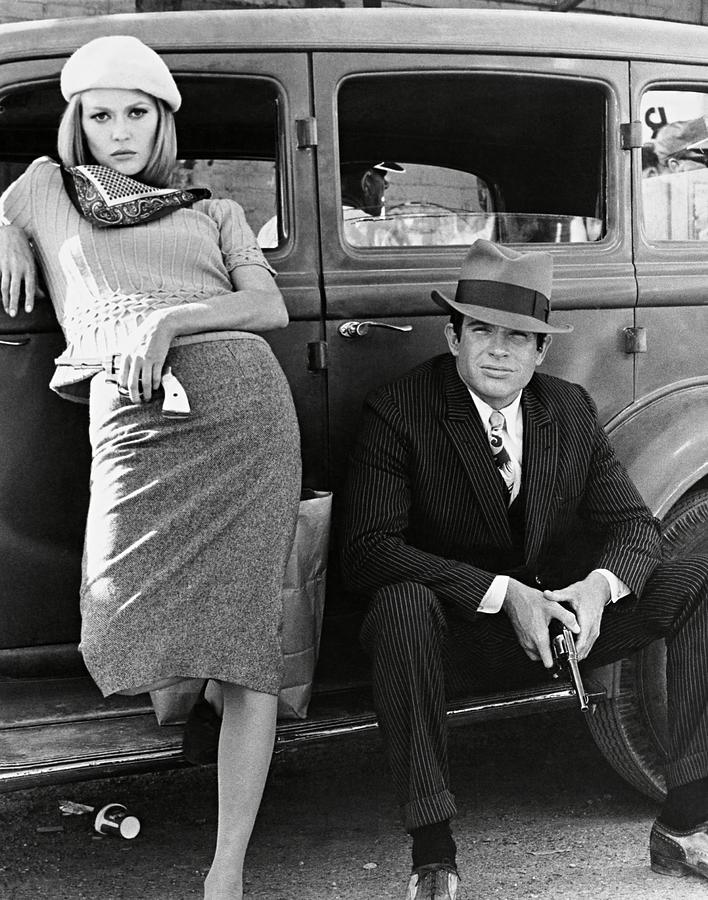
He had only three top 10 hits, but they all went to number one. My favourite was ‘Yeh Yeh’; the one I remember best, ‘The Ballad of Bonnie and Clyde’, was a tie-in with the 1967 movie starring Faye Dunaway and Warren Beatty. With the latter, Fame became the epicentre of a cultural moment: the film launched a style revolution, with Dunaway’s elegant gangster-gal costumes single-handedly killing off the mini skirt in favour of the midi (much to the disappointment of my 13-year-old self).

Bonnie and Clyde

Gangster gal (Source: Warner Bros)

Pink Floyd. This is a band you never speak of in just the past tense: they were, are and forever will be. One of the reasons they will endure, in my view, is that, while they charted the outer reaches of psychedelia, their far-outness was perhaps one of the most reassuring things about them; what was really unnerving about Floyd was their connectedness to reality.

We all know the sad story of sweet Syd Barrett. He defined Floyd’s originality as a combination of eccentric English pop sensibility (‘See Emily Play’) and space-age or science-fiction themes and imagery (‘Astronomy Domine’). It was after Syd had left the band and become institutionalised that a dark psychosis entered the music, culminating in the monumental and classic Dark Side of the Moon. But the strength of the album, I would argue, lies in the fact that its edginess is grounded in the stark contemporary realities of the Nixon years, Watergate and the Vietnam War.

There’s more to Floyd than this, I know, but we’re talking about how music shapes lives and memories. I was introduced to Dark Side by a friend from school (let’s call him Malcolm) who had dropped out after Year 10 and fallen under the spell of dope, acid and an all-consuming existential rage. We no longer had much in common personally, but we rediscovered each other through that album. I discovered a lot about myself, too, and I was grateful for the fact that, while the realism at the album’s core would take me close to the edge, the sheer artistry of it would lift me up and set me down somewhere safely again.

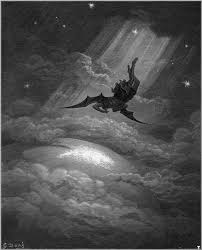
Gustave Dore - Satan falling

Coming down after listening to “Dark Side”

It didn’t work out that way for Malcolm. The last I heard about him (and this was only 10 years ago), he had become the town’s tragic freak, standing on street corners, cross-dressed and stoned, yelling at passers-by. He lived alone in sheltered accommodation. One night the police turned up, took him away, and that’s the last any of our mutual acquaintances saw of him.

If Floyd defined the downside of my adolescence, 10cc was very much part of the upside. Apart from the Beatles and Beach Boys, few bands, in my opinion, have so consistently raised pop to the level of art (and I don’t mean pop-art). ‘Rubber Bullets’, ‘The Dean, His Daughter and Me’ and ‘Wall Street Shuffle’ were part of the soundtrack to my later school years, while ‘I’m Not in Love’ came out while I was at university. It was hard to know where pop would go after that; perhaps it’s one of the reasons punk rock became necessary—after all, the song has become deeply embedded in the sonic wallpaper of every shopping mall in the Western world. Everything about it is perfect—not least the multi-vocal backing track which, along with the overall Spector-ish ambience, takes me back to The Mindbenders’ 1965 hit, ‘Groovy Kind of Love’. Eric Stewart sang vocals on both records. I hadn’t realised it until now, but that guy bookends my life from puberty to early adulthood.

“Ladies and gentlemen,” says a familiar voice over the PA, “pray silence while The Sidemen take the stage and reserve your applause for when I come out to join them.”

The audience laughs. So that’s how he’s squaring the “Sidemen front and centre” circle. Classic Banksie.

LICKS AND YARNS

First number, and they set the tone perfectly with a mid-tempo disco beat that turns out to be the 1981 Darryl Hall and John Oates hit, ‘I Can’t Go for That’. All we know at this point is that The Sidemen will be playing songs they used to play, wrote or wished they’d written. Presumably this number, penned by Hall and Oates, falls into the last category. Which kind of makes sense as It’s stylish and accessible—a bit like The Sidemen themselves.

Right to left, we have Jeff, head to toe in black, former lead guitarist with the Black Sorrows and Jo Jo Zep, playing a custom-made Noyce, also black, through what can only be described as a rather phenomenal-looking-and-sounding Fender amp in a matching black cabinet offset at the front by the tastefully subdued glitter of a silvery grill cloth.

(This amp, as will become apparent, is crucial to the whole enterprise.)

Greg, his head crowned with a magnesium halo of curls, is easily the most exotic-looking, but substance more than matches style as he rolls out a bass line that’s solid and vibrant, like a hardwood timber floor.

Grant on drums is in his early forties, which makes him the baby of the group but, judging by his relaxed composure, he could be the most experienced of them all.

Rick, tall and English, coaxes perfection out of a Roger Giffin Strat copy with a gentlemanly charm that makes the whole thing look so damned easy.

And Bruce, far left, sitting ramrod straight at a Nord keyboard, adds colour, texture, depth and rhythmic nuance with a poise that totally belies his self-effacing personal manner.

Sidemen on stage 1

Let it rock (Source: LisaGPhotography)

Behind Jeff, a bonus for the evening—backing singers Vanessa and Martine; and, front and centre, singing his heart out and grinning like a kid in a toy shop, Banksie.

Jeff is the first to receive the This Is Your Life treatment. Born in Mt Waverley, Victoria, to a musical family, he played in several bands before international success with Jo Jo Zep. Later, as part of the Black Sorrows, he co-produced several platinum-selling records with Joe Camilleri.

“Name one of the highlights of your time with the Sorrows,” says Banksie.

“Playing on the steps of the Sydney Opera House.”

Greg pipes up from the back: “I was there!”

Jeff turns: “Were you?”

These guys have so much history to share, they’re still discovering each other’s, on stage, in real time.

Cue two Sorrows numbers, ‘Hold on To Me’, with its killer opening line (“We were dead on arrival…”), and ‘Harley and Rose’.

Next up: Grant. Born and grew up in Sydney (Maroubra/Matraville) and moved to Byron because “the surf’s better”. A nun taught him piano as a kid: “it was horrible”. As a drummer he’s worked with Labi Siffre and Jackie Orszaczky among others and toured the world with John Butler, playing major venues like Madison Square Garden.

This leads into Siffre’s ‘I Got the Blues’—which I initially mistook (similar intro) for Butler’s ‘Zebra’.

Greg Lyon was originally from Melbourne (where Jeff and Bruce are still based). He started gigging in his teens with someone called Little Johnny Farnham and became a regular in the Aussie Blue Flames, the local combo which backed Georgie Fame on his Australian tours. After a spell in the States he relocated to Byron, combining music with a 20-year career in academia, during which he helped create Australia’s first contemporary music degree course at Southern Cross University.

They play ‘Yeh Yeh’ which makes my night. It’s at this point that I notice that the audience, just like me, are seriously enjoying themselves.

And then it’s Greg’s turn to do an intro.

“Not so long ago, Rick mentioned to me that, with Mike Oldfield, he’d co-written a song for Hall and Oates, ‘Family Man’, which enabled him to buy a house in Byron Bay.”  A mercenary glint lights up his eyes. “So naturally I said to him, ‘Let’s write a song together’. This is it.”

It’s called ‘Do I What I Say, Not What I Do’. Greg apologises for the “indulgence” and says that it’s still a work in progress. No apology necessary, of course; the song rocks along very nicely.

Rick’s next. Born and bred in Oxford, England, his big break came in 1976 when the drummer of 10cc recommended him to the rest of the band. He joined to promote the Deceptive Bends album and has been with them ever since. Along the way he recorded an album with Nick Mason from which a single, ‘Lie for a Lie’, sung by Dave Gilmour with Maggie Reilly on backing vocal, was a hit in the US. And, with Pete Howarth of The Hollies, he wrote a rock opera, ‘Robin Prince of Sherwood’, which toured the UK and had a good run in the West End.

The band launches into ‘Lie for a Lie’ followed by ‘Dreadlock Holiday’, Grant nailing down reggae snare fills in a way that makes any distinction between technique and feel totally meaningless.

Suddenly it’s the interval. How did that happen?

A HARSH REALITY

The first I knew for certain that the gig was taking place was when Banksie rang me.

“Listen, mate, I got a favour to ask. Equipment hire is pretty expensive and I’m trying to keep costs down so that there’s as much money as possible for the band. Could I possibly borrow your amp for Jeff to use? We’ll need it for a couple of weeks, to cover rehearsals as well as the gig.”

Let me get this straight, I thought. Jeff Burstin, ex Jo Jo Zep and the Sorrows and ARIA Hall of Famer, would like to borrow my lil’ old Fender Hot Rod amp which, because I’m still a 10-hours-a-day desk-bound working stiff, I hardly ever get to use?

Two possible replies sprang to mind: “Is the Pope…?” and “Does a bear…?”.

pope and bear

Is he? Does it? (Source: eyeofthetiber.com)

Eventually I settled for, “Yeah, sure, no worries”, and hoped it sounded nonchalant.

Yes, I admit, for a moment there I was reduced to a state of childish excitement. My amp? On stage with these guys? But I make no apologies.

We all have our passions—music, sport, politics or whatever—and our heroes in those fields. Mine from an early age were guitar music, guitarists and their guitars: Eddie Cochran and his Gretsch, Bert Weedon and his Guild, Hank Marvin and his Burns, Lennon and his Rickenbacker.

Most of us don’t have the talent to indulge our passions personally, at least not at an elite level, and therefore do so vicariously, through our heroes. So, on the odd occasion when our personal lives and the idealised world of our heroes intersect, it’s OK in my book to be, as I was, a little star-struck.

But the sense of referred glamour didn’t last long, because Banksie’s request reflected a harsh reality: the economics of making and performing music in the 21st century.

Musicians have always been the last to get paid, but it’s even harder for them today. The internet, social media and streaming services have destroyed the business model of record sales, regular gigging and tours that underpinned the music industry’s growth in the 1960s and 1970s.

Online technology has made music more ubiquitous than ever, especially through personal listening devices, so that individuals these days are increasingly accessing music privately and relying less than their parents did on mass media and live venues.

scream on headphones

The alienating effect of personal listening devices… (Source: everydayisspecial.blogspot.com)

And advances in electronic music equipment have made it easier for solo performers, DJs or small groups to flood venues with big digital soundscapes at a fraction of the cost that promoters would have to pay to hire a more traditional band of three, four or more musicians.

It’s got to the point that many live venues don’t charge the punters for the music. The idea is that the band brings in the crowds to increase the trade at the bar, then gets paid out of the “additional” takings. The proportion they receive is usually no more than a few hundred bucks in total.

I’ve even heard that some venues expect the musicians to underwrite the bar take: so, if the expected “additional” $2,000 or whatever doesn’t materialise on the night, the musicians are expected to compensate the venue. You couldn’t make it up.

My guess is that, for most of their working lives, The Sidemen would have followed the traditional template of gigging, session work, song writing and teaching, enabling them to enjoy satisfying careers and decent, though probably not particularly flashy, lifestyles.

Now, they face the same challenges as everybody else.

“When you think of all the talent and experience and years of musical history that these guys represent, there’s got to be a way of rewarding them more appropriately, in a way that gives value to the public too,” said Banksie toward the end of the call. “The question is, what is it?”

He was speaking now, not as the stars-in-his-eyes front man planning a major gig, but as a successful, retired businessman warming to a new challenge: how to introduce a measure of equitability in an industry where, more than ever, producers and creators are being denied a fair share of their rewards by distributors and consumers.

“I don’t know,” he said, answering his own question, “but I’m working on it.”

SHARING A PERFECT WAVE

I confess I’ve never seen the 2001 Australian hit movie, Lantana. Noirish, introspective stories about tangled relationships in suburban Sydney are not my thing. As far as I can tell, though, the title and creeping-plant imagery are well suited to the theme. I just tried reading the plot summary on Wikipedia; it was like ingesting broken glass.

Cue Bruce. He was part of the team, including Paul Kelly, that created the film’s soundtrack. The second set begins with the Lantana trailer, minus sound, playing on the backdrop and Bruce improvising over it. A dark and empty road lights up like foil in the headlights of a car; couples couple or glare moodily at each other; one woman talks tearfully to another; two men snarl at each other; Geoffrey Rush stares down at the Hawkesbury River, as into a metaphysical void; a woman’s body is thrown from the car….

Bruce’s music creeps from the shadows and curls itself around the images like the caress of a lover which, at any second, could snap into a stranglehold.

He’s from Bright, a charming old gold mining town in Victoria. Before being discovered by Richard Clapton’s bass player, he’d never played to an audience of more than about five people. Now his track record includes working with Kelly, Russell Morris, Renee Geyer, Colin Hay, The Waifs, Archie Roach and many more. He’s worked on the music for 15 films and won an ARIA for Lantana.

“You were there when Kelly wrote ‘How to Make Gravy’, weren’t you?” asks Banksie. “What happened?”

“Well, he walked into the room, playing a guitar, and said, ‘What do you think? It’s got a few chords from another song so I’m not really sure….’ And I said, ‘Nah, it’s really good. Work on it.’”

From little things, big things grow.

Guest vocalist Mark Jelfs channels Kelly with a near-perfect rendering of ‘Gravy’, and the show changes gear. The interviews are done, and the songs are no longer in support of anecdote or historical perspective. From this point on, The Sidemen are playing whatever the hell they want to.

The classics—so many of them my personal favourites—come thick and fast: ‘Rag Mama Rag’, ‘Drive My Car’, ‘Come Together’, ‘Heading in the Right Direction’ (the Renee Geyer classic with Vanessa delivering a beautifully judged lead vocal), ‘Shape I’m In’, ‘Oh Well’ and ‘Family Man’.

People are dancing, filling the space in front of the stage; the rest of us are either standing or rocking in our seats, clapping time. I turn to my Better Half: “Hey, that’s my amp up there!!”

Sidemen dancers

One timeless moment (Source: LisaGPhotography)

“Yes, dear, lovely,” she says, and pats my knee before losing herself in the moment again.

We’re all reliving the best musical times of our lives, but there’s something else going on here, too. It’s particularly noticeable on ‘Come Together’ and an unrehearsed ‘Sunshine of Your Love’ which forms part of the encore (Rick walks over to Banksie: “Is this in E?” Banksie laughs and nods.)

Is it the sound quality? It’s been good all night, but now it seems to lift a notch. Or maybe the songs are taking on a new, fresh life of their own. We know them inside out, but they sound clear and pristine, as though we’re hearing them for the first time.

The Sidemen are not just purveying musical history, they’re creating their own timeless moment—and we’re part of it.

That’s not just my opinion. It’s clear from the mood of the rest of the audience as we spill out onto the street that it’s been a pretty special evening. So often when you get carried along by a crowd you feel as though you’re spiralling downward into something; not this time. The sense of energy and release is palpable, as though we’re all surfing the same perfect wave.

That’s when my moment of clarity hits: the real story of The Sidemen is not about the stars they supported back in the day, but about the talent, skills, hard work, creative energy and unassuming professionalism they’ve brought, and continue to bring, to every job they’ve done.

And it’s about the enduring musical legacy and tradition they’ve created in the process. Stars come and go, but it’s the side men and women of this world who keep the show on the road.

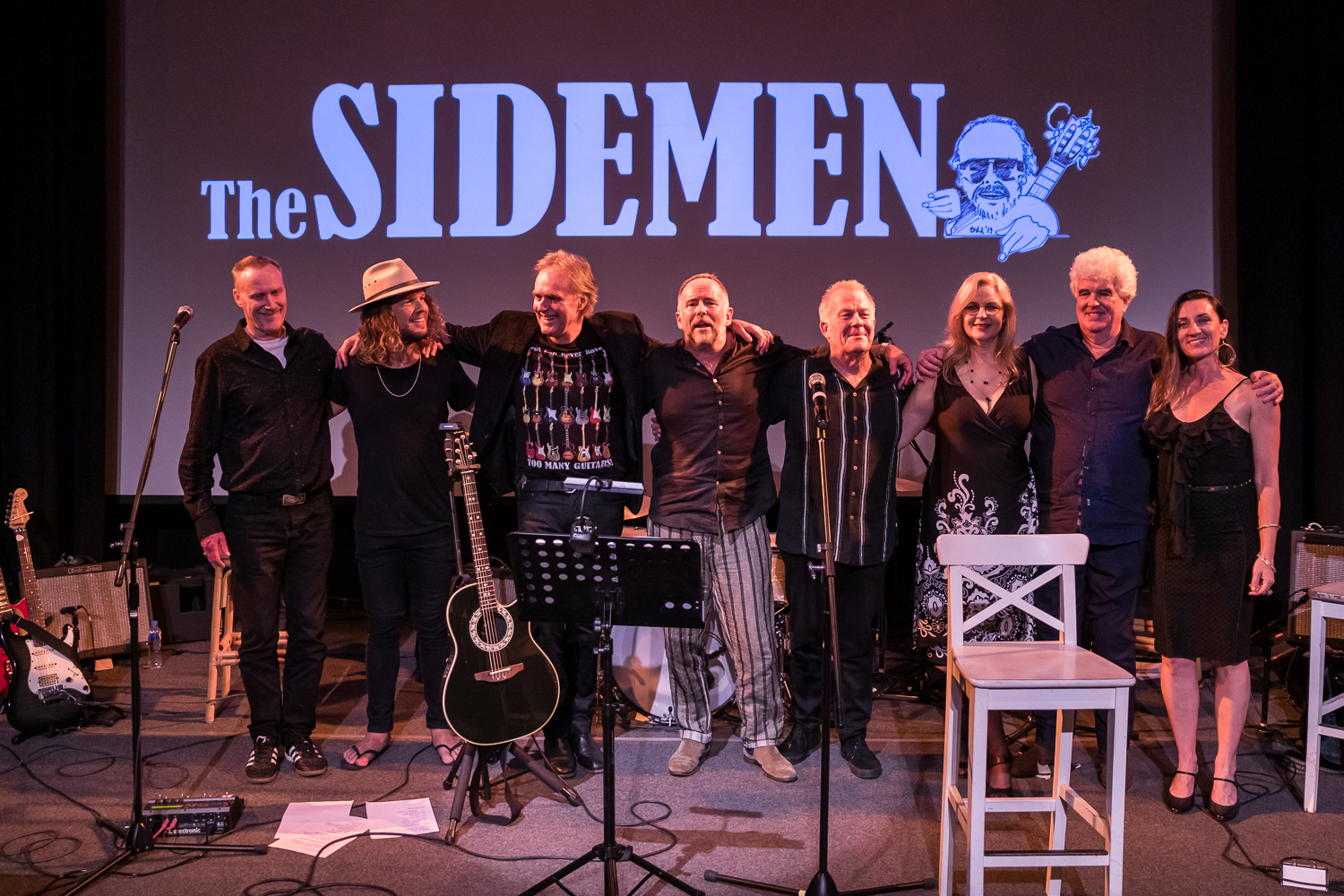
Sidemen taking applause

Job done (Source: LisaGPhotography)

At the pub the next day we catch up with Banksie, his family and friends, and most of The Sidemen. The mood is tired but happy. Bruce has had to go back to Melbourne for a gig. Before he went, he said something to Banksie which, we agree, will resonate with us for a long time.

“In 40 years of playing live, that’s the first time I’ve ever spoken on stage.”


A Mudgee Moment

01 Tuesday May 2018

Posted by Rody in National

≈ Comments Off on A Mudgee Moment

Some moments come to you as a gift. On a visit to Mudgee at the weekend I found a café tucked away in a courtyard behind one of the main streets. As in most Australian country towns, the shops were closed on Saturday afternoon, so the café was quiet. A middle-aged woman sat alone, reading her Kindle, on one of a suite of faded armchairs arranged around a low table which effectively formed the centrepiece of the outdoor seating area. I took a side table next to the door of the café interior, close to a speaker that relayed a tasteful selection of modern country blues. The staff – all women – were friendly and I ordered a large flat white and a slice of fruit loaf. Sparrows pecked at the uneven cobbles and flew up to perch on the bare vines that hung overhead, watching for the next opportunity to snatch a crumb. I waited for them to pounce.

“Look at you, enjoying the peace and quiet,” said the waitress as she set down my coffee.

“It’s an oasis,” I said. “And I love the music.”

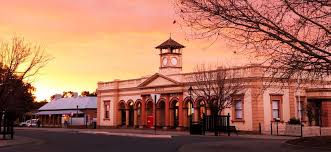
Mudgee is a typical Australian country town of wide streets and low colonial buildings where church spires are still the tallest structures you can see, until your eye wanders to the blond-green hills beyond them. The old rural and gold-mining economy of the surrounding area has been replaced by vineyards and olive groves, and wine bars and restaurants specialising in local produce alternate with older, less glamorous businesses such as pubs, Thai massage parlours and thrift shops. In the quieter enclaves, several retail premises stand empty.

mudgee-post-office

Old Telegraph Station and Post Office, Mudgee

On this afternoon, Saturday or not, the main street had a lively atmosphere, thanks mainly to the al fresco winers and diners. At one end of the street, close to where the Cudgegong river cuts through the town, a saddlery stood opposite a wine bar offering live music. The shop was open and I wandered in, drawn by the wholesome smell of leather.

cudgegong

Cudgegong River, Mudgee

“Where you from, mate?” Behind the counter an old lady sat hunched over a sewing machine, rapid-fire strafing a horse blanket with needle and thread.  Her red leathery skin made her hair seem whiter than it really was.

“Sydney.”

She nodded, as if to say, “Thought so.”

“I’m normally closed at this time, but I’ve got so much to do.”

At the other end of the street, and at what seemed to be the far end of the town’s cultural spectrum, I found the Mudgee Art House, run by a painter called Warwick Behr. He signs himself Warbehr. I bought a print of his painting of a black cockatoo—a mysterious and iconic Australian bird, reimagined as a splash of psychedelic colour.

warbehr-print-black-cockatoo-on-mustard_grande

Black Cockatoo on Mustard, by Warbehr

Intimate Strangers: Rody Finally Gets It

27 Tuesday Feb 2018

Posted by Rody in Correspondence

≈ Comments Off on Intimate Strangers: Rody Finally Gets It

Dear Stranger – this is a very belated reply to your helpful discussion of, in your words, the “two…extremes” of the human condition, pagan egoism and civilised alienation. I think that’s a fair description of the polarity I felt after my Nimbin experience. The reason I’m writing now is that I’ve been motivated to do so by a recent incident which has helped me to put things in a deeper perspective.

As you know, I promoted the wedding anniversary song “Can’t Stand the Heat” on Facebook earlier this month, to coincide with Valentine’s Day. It did well, with more than 2,000 hits on Soundcloud and 1,500 likes, 54 comments and 284 shares on FB. For reasons I don’t quite understand, nearly all the responses were from South Africa, although I had also targeted Australia, New Zealand, the US and UK in the campaign. I can only assume there was some sort of bias in the FB algorithm; either that, or South Africans are a lot more romantic and sentimental than the rest of the English-speaking world. Personally, I incline toward the algorithm theory.

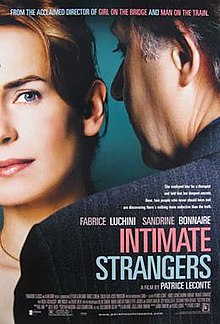
Now, here’s the thing: the (overwhelmingly positive) comments were mostly about the love that people felt for their long-term (and, in some cases, deceased) wives, husbands or partners (I was targeting a 30 to 65+ age demographic). It was a privilege to receive from absolute strangers open and emotional comments about an intimate matter of such importance to them. It reminded me of the familiar phrase and film title, “Intimate Strangers”, which neatly captures the tension between the intimacy of the comments I received and the fact that they were from people unknown to me. This polarity between intimacy and stranger-ness seemed to carry an echo of your ego-alien polarity.

intimate-strangers

And another echo: the one implicit in the words “Universal Stranger”—most of us are unknown to our fellow humans, but we all share a common or universal humanity.

This begins to look like what you call the middle way or the space between: a sense of half-connectedness with humanity in general, which is both forced upon us by the alienating effects of modern society and yet also made possible by the technology which is so much a part of that society. Conceptually, it looks like a paradox, but it lies behind what, for many of us, is a psychological truth: And then that voice said/You’ll always live/Between the Whirlpool and the Worm. (“Black Wave”)

Thanks for the insight. All I need to do now is figure out how to apply it in a practical way each day.

Cheers,

Rody.


New Australia Day: a Modest Proposal

25 Thursday Jan 2018

Posted by Rody in National

≈ Comments Off on New Australia Day: a Modest Proposal

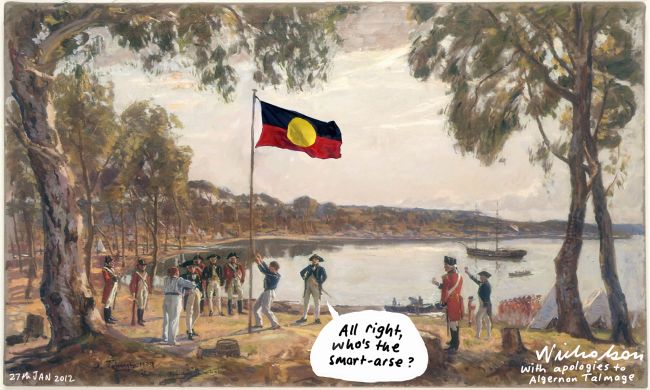
Australia Day means different things to different people: for Anglo Australians, it marks the beginning of European settlement and the transformation of a pristine wilderness into a modern democratic nation state; for many indigenous Australians, it’s “Invasion Day”, the beginning of the end of their traditional way of life and the source of their present-day difficulties.

In my case it was the date in 1991 when, with my pregnant wife and young family, I left the UK to make our home here.

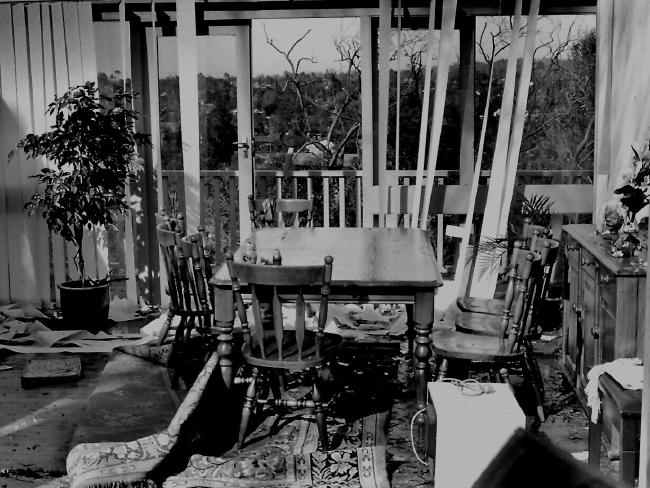
After a 24-hour flight and the adjustment of our watches, we arrived on January 28 to find that the area of Sydney where we were to spend our first few weeks had been devastated by a cyclone. Just two weeks later my wife went into premature labour. She was hospitalised. The baby – the longed-for sister for our two sons – was born two months later but survived only a few hours.

turramurra-cyclone-1991

Welcome to Australia. Source: The Daily Telegraph

Our personal history has much in common with that of other migrants and, indeed, the history of modern Australia: a fresh start, hope, crushing disappointment, resilience and survival. We have our third child: he’s a fine, strapping young man, just like his elder siblings. Not only that, but we have just welcomed our first grandchild (another boy!) into the world. Life doesn’t get much better.

So, when I think of Australia Day, I think of a lot of things, good and bad.

Consequently, it’s not hard for me to imagine that Australia Day is good for some people, less good for others. I’m not a fan of the black arm-band view of history and I love this country unreservedly, but I’m not blind to its faults. I have no first-hand experience of the kind of deprivation suffered by many indigenous Australians, but I’ve seen enough of it to know that it’s real and to understand why Australia Day is alienating for many of our first people.

So, let’s change the date; and let’s not.

nicholson-cartoon

Peter Nicholson, The Australian

I’m conciliatory rather than combative by nature, and the heated – and, all too often, overheated – debate about whether to change the date and what the new date should be doesn’t float my boat. So much of it is little more than grandstanding; no-one appears to be seriously committed to finding a solution. For what it’s worth, here’s my suggestion.

In the interests of acknowledging our history, both the good bits and the bad, and celebrating our achievements, let’s keep Australia Day on January 26. And let’s choose an entirely different day as “New Australia Day”.

That’s right – two Australia Days, if you like, each with a different but complementary purpose. While January 26 would still look at our past, and at our present in the context of that past, New Australia Day would challenge us to look to the future as one people. While January 26 would still celebrate what we have been and what we have become, New Australia Day should inspire us to embrace our potential to become something bigger and better – more egalitarian, more inclusive, more open-minded and open-hearted…more Australian, in the best sense.

Naturally, only one of these days would be a public holiday, and I think it should be New Australia Day. The change would be an acknowledgement that Australia has moved beyond (but not forgotten) its British and European roots and is maturing as a multi-cultural society which values its shared traditions, including those of indigenous people, and the opportunity they represent to create a richer and fairer future for everyone.

Mark Kenny recently argued in the Sydney Morning Herald for changing Australia Day to May 9. His reasons for choosing that date were good, but I think it would be a better New Australia Day.

C’mon Aussies, let’s end this pointless bickering and meet each other halfway with a double-barrelled national celebration which, while admittedly a compromise, is still symbolically meaningful: an acceptance of our past together on one day, followed at a later date by a new imaginative space in our national life in which we can come together and pool our strength, hopes and visions for the future.

Pagan spirituality vs. civilised alienation: Rody’s post-Nimbin existential meltdown

18 Wednesday Oct 2017

Posted by Rody in Correspondence

≈ Comments Off on Pagan spirituality vs. civilised alienation: Rody’s post-Nimbin existential meltdown

Dear Stranger,

Further to my Nimbin roots festival review of September 28, I’ve been thinking about the experience from a deeply personal perspective. Like most people on this blog, I’m trying to figure out where I belong in the general scheme of things. In my case, this questioning arises from youthful experience of relocation and alienation, which resulted in my feeling “cut off” from my creative roots—the land and the people of my childhood. At Nimbin, I glimpsed the possibility of reconnecting to them.

nimbin-heads

Only reconnect (Source: Nimbin Roots Festival FB page)

Nimbin of course is on the opposite side of the planet to where I was born but, as I noted in the piece, there are similarities between the town (drug culture aside) and where I grew up: a relatively small community with a retail economy set in a rural environment. This and the vibe that was everywhere that weekend revived in me a sense of creative possibility I hadn’t felt since I began writing music and poetry in my teens.

The question is, how do I respond to this or build on it? Do I immerse myself in the pagan spirituality that the Nimbin hippie culture represents, or do I draw on it as material for a broader creative enterprise which also addresses more “civilised” or conventional values?

I feel as though I’m at a crossroads here.

Sincerely,

Rody.

Folk Dancing with the Pot Head Pixies of Planet Nimbin

28 Thursday Sep 2017

Posted by Rody in Festivals

≈ Comments Off on Folk Dancing with the Pot Head Pixies of Planet Nimbin

Nimbin is to Australia what Planet Gong is to the rest of the cosmos, and I had the pleasure of visiting it for the first time on the weekend of September 15-17, which happily coincided with the town’s second annual Roots Festival. If you like your music earthy, this is the place to be—and it’s a lot better value than the yuppified (though still admittedly very good) Byron Bay Blues Festival which takes place every Easter an hour or so’s drive away.

nimbin-street

High Street (in every sense), Nimbin

And what a drive: this part of northern New South Wales really is God’s own backyard with curvaceous hills, fragrant bush and slinky valleys which, under sunny blue skies, are beguiling enough but would look and smell downright voluptuous after a drop of rain. But I digress.

nimbin-rocks-north-coast

Nimbin Rocks (that’s enough puns—Ed.)

The town is certainly a hippy haven and cynical city types like me can quickly tire of its monomaniacal preoccupation with dope and related paraphernalia, evident at the various cafes (“The Bent Joint”) and shops (“Hemp Embassy”). There’s an underlying authenticity, however. It put me in mind of what my small and unprepossessing home town might have become, had I been able to fulfil my schoolboy fantasy of replacing its water supply with lysergic acid.

But enough about me. What about the music?

Saturday

The first act I saw wasn’t particularly promising: an earth-spirit wearing dreadlocks and a loin cloth and smeared head to toe in mud, who snapped into life and played a ditty on the Pan pipes in return for some coin. A little way down the street was a different story: some very fine blues harp indeed courtesy of Billy James from Billinudgel. He told me he enjoys teaching as much as playing, and I would have signed up for lessons on the spot but for the fact that I live an hour’s flight away.

That was it for the buskers. I have the festival flyer to hand and I could easily count the number of acts for the sake of statistical interest, but life’s too short. Suffice to say there were far too many, spread across six venues, for any one person to see them all. The first stage act I saw were blues/folk duo Darktown Strutters who played a very traditional set with sweetness and respect. Frustratingly, I can’t seem to find any examples of their music online (plenty of other bands called Darktown Strutters, but not them).

Blues Arcadia from Brisbane turned up the heat at Nimbin Hall with their soulful blues punched out by Chris Harvey on guitar and the charismatic Alan Boyle on vocals. Rhythm and keyboards were great, too, although I can’t say I saw much action on the bassist’s fifth string. Expensive thumb rest? Hmm….

They were ably followed by The Taste from Cairns who blended hip-hop with rock, soul and funk. The horns featured in the video below were absent on the day, but no matter. They were a blast: I particularly liked the lead guitarist’s imaginative but restrained use of effects and Vanessa’s vocals. (Note to rest of band: this lady is woefully under-utilised. Use her or lose her.) They sold branded stubby holders as well as CDs: a class act. They made me feel old, though: clearly nobody who remembers, or has heard of, Rory Gallagher would have chosen that name for their own band.

The other thing that made me feel old was the fact that neither I nor my companions had heard of ANY of the bands appearing over the weekend. We decided to choose which acts to see based on how interesting or exotic their names were. This put Sweet Emily and the Judgemental Fucks at the top of our list. They didn’t disappoint. Tight, angular rock underpinned by Emily’s chunky guitar rhythms and sharp-tongued solo notes. Many of her songs gave insights into her personal life, some of them intimate, all of them colourful. Tourette’s Syndrome never sounded so good.

And so, eventually, to bed.

Sunday

Another beautiful day in paradise, beginning with excellent chai at the Phoenix Rising Café and what turned out to be my favourite act of the whole weekend. Jolanda Moyle plays ethereal, transcendent modern folk using acoustic guitar loops, sarangi (a classical Indian instrument, somewhere between a violin and a cello) and a hauntingly pure voice with plenty of reverb. Definitely music of, and for, the gods. “You’re in love with her, aren’t you?” said my bride of 33 years. “Er, well…”, I replied. Rolling her eyes, my beloved and our friends took their leave in search of entertainment better suited to the mere mortals which, through no fault of their own, they are.

Back to the Bowlo for some pared back electric blues from Gold Cost duo The James Street Preachers. As the video shows, Jamie Kasdaglis (guitar, keyboard and vocals) and Matt Lye (bass, vocals) are adept at multitasking.

And to cap it all off, Missus Hippy and the Love Handles on the Aquarius Stage—the venue reserved for local acts. Talk about Old Wave music in all its dusty glory: this is the first band I’ve seen in which neither of the guitarists has a full set of teeth. That is not a put-down but a celebration of the fact that men and women of a certain age can still rock it up with the best of them. MHLH do so with original material which is variously timeless and topical, written by rhythm guitarist Doug (I’d play the outstanding My Dog, but the sound quality on my phone video doesn’t do it justice). Mrs H. (aka Biscuit) sounds like a blues mama from way back and exudes earth-mother warmth while lead guitarist Joey has a certain, shall we say, other-worldly appeal. Bob on bass and the drummer whose name I didn’t catch carried it all along very nicely. A highlight of the weekend and a band I would love to see again.

Another highlight: staying at Crofton’s Retreat. Thanks to Wayne and Paul, Bear and Jack. See you next year, guys.

Rody Chips In…

10 Monday Apr 2017

Posted by Rody in Correspondence

≈ Comments Off on Rody Chips In…

Howdy, Stranger (always wanted to say that) and Lizard:

You’ve both been looking at the relationship between metaphysics and practical philosophy; I’ve been thinking about Esse from a different perspective, namely reflective or meditative. I see a parallel of sorts between the kind of seamless conceptual coherence that the Lizard is looking for and the mental clarity I find that contemplation of Esse can give me.

The meditative technique—if I can call it that—begins, as most do, with a relaxed but stable sitting posture with eyes closed. After focusing initially on the idea of Esse as the object of contemplation, the mind disengages from conscious thinking and becomes aware only of itself. The process then follows a path analogous to your description, in the “Genesis” piece, about the self, spontaneously aware of its singularity, becoming conscious of an external reality which (the mind having been primed to contemplate Esse) manifests itself in this instance as a generalised sense of existence. This state having been achieved—I call it “apex consciousness”—the mind focuses on the idea that existence is God and God is existence or Esse, and that Esse is eternal, with nothing before or after it. The object is to sustain this thought and no other for as long as possible.

buddha

The first time I tried this I was stunned by the feeling of transcendence it gave me (not to mention a particularly interesting physical side effect). I’ve tried it a few times since without the same intensity of impact, but I plan to keep practising with the aim of getting better at it, and developing the ability to use it as a psychological resource.

I’m not sure what, if anything, this adds to your conversation, or what role, if any, meditation etc. plays in your thinking about Esse.

Rody

← Older posts

Recent Posts

  • Nick Ward and The Power of Being Human
  • Antisemitism: it’s an attack on all of us
  • Stretching My Legs: a Dog, the Dead, and a Mad-Looking Librarian
  • The Queen, the Prime Minister and the Rise of Woke
  • Triumph of the spirit: Jeff Cotton’s 52 years of healing

Recent Comments

    Archives

    • August 2025
    • May 2024
    • November 2022
    • September 2022
    • August 2022
    • June 2022
    • June 2021
    • April 2021
    • February 2021
    • August 2020
    • March 2020
    • October 2019
    • August 2019
    • August 2018
    • July 2018
    • May 2018
    • February 2018
    • January 2018
    • October 2017
    • September 2017
    • July 2017
    • June 2017
    • May 2017
    • April 2017
    • March 2017
    • January 2017
    • October 2016
    • May 2016
    • December 2015
    • July 2015
    • May 2015
    • April 2015
    • January 2015
    • September 2014
    • August 2014
    • July 2014
    • June 2014
    • May 2014
    • April 2014
    • March 2014

    Categories

    • Correspondence
    • Deep and Meaningful
    • Festivals
    • He Ain't Heavy
    • Heritage
    • International
    • Local
    • Metro
    • Music
    • National
    • News
    • Saturday Sports Special
    • Uncategorized

    Links

    • Facebook
    • Twitter
    • YouTube

    Proudly powered by WordPress Theme: Chateau by Ignacio Ricci.